
You signed nothing and said nothing. Yet you may already be bound. That is the quiet power of ratification: approval given after an act, which reaches back and treats the act as valid from day one. The word turns into contracts, boardrooms, the Senate, and the Constitution, and the logic barely changes between them.
What Does It Mean to Ratify Something?
To ratify is to approve an act you were not bound by and to accept it as your own. The approval can be a vote, a signature, or plain conduct like taking the money. Once given, it usually dates back to the original act rather than the day you agreed.
That backdating is the whole point. Without it, every act done slightly outside the rules would sit in limbo until somebody redid the paperwork. Legal terms often sound heavier than they are, in the same way internet shorthand does, once you know what the slang phrase FAFO means. Strip this one back, and it is just formal after-the-fact approval.
| Setting | Who approves? | Threshold | Effect |
| Contracts and agency | The person for whom the deal was made | One party’s word or conduct | The deal binds from its original date. |
| Corporate boards | Directors, sometimes shareholders | A board vote, often a simple majority | An officer’s unauthorized act becomes the company’s |
| Treaties | The President, after Senate consent | Two-thirds of senators present | The country is bound internationally. |
| Constitutional amendments | State legislatures or conventions | Three-fourths, meaning 38 of 50 states | The text becomes part of the Constitution. |
Key Takeaways
- Approving an act after the fact usually makes it binding from the original date, not the day you approved it.
- Conduct counts. Cashing the check or keeping the goods can approve a deal as firmly as a signature.
- You need capacity and full knowledge of the material facts, and you have to take the whole deal.
- A voidable agreement can be cured this way. A void one, such as a forged signature, cannot.
- A constitutional amendment needs 38 of the 50 states. A treaty needs two-thirds of the Senate voting to consent.
What Is Ratification?
Ratification is the legal act of approving or accepting something that was previously done without proper authority or approval. It can occur through a written agreement, a formal vote, or conduct that clearly shows acceptance, such as keeping a benefit or continuing to perform under a contract.
Once properly ratified, the earlier act may become legally binding as though it had been authorized from the beginning. Ratification is commonly used in contract and agency law, corporate decisions, treaties, and constitutional matters, although the specific requirements and legal effects vary by context.
What Ratification Requires in Contract Law
This is the version most readers actually run into. Someone signs on your behalf without authority, or you sign at 17 and turn 18 a month later. The agreement is not dead. It is voidable, which means you get to choose.
Three conditions decide whether your choice sticks:
- Capacity at the moment of approval. You have to be legally able to make the deal now, even if you were not when it was made.
- Knowledge of the material facts. Approving a deal you were never told the real terms of does not count.
- The whole transaction. You cannot keep the favorable clauses and disown the rest.
- Conduct does the work far more often than paperwork. Keeping delivered inventory, making the second payment, moving into the apartment: each says yes louder than a countersignature. Consumers meet this most often in financing. Read a plain guide to What Is a series LLC is. Complete Guide to States, Costs, and Real Legal Risks before you keep paying on a deal you dispute. Paying while you complain can undercut the complaint.
Everyday moments that count as approval
None of these involves signing a fresh document, and all of them can bind you:
- Paying an invoice that a manager had no authority to sign.
- Keeping a shipment you never ordered at the agreed price.
- Renewing a policy that an agent bought for you without asking.
- Collecting rent under a lease that a relative signed on your behalf.
- Continuing to use the software after a colleague accepted the new terms.
Each of those follows one pattern. You learned the facts, you took the benefit, and you did not object. Two of those three alone are usually not enough, and all three together usually are.
What Cannot Be Fixed This Way?
A void agreement is a different animal. It never existed as a contract, so there is nothing to approve. Forged signatures, illegal purposes and deals no party could lawfully make all stay unenforceable, however enthusiastic the later approval. Timing matters too. You lose the option once you affirm it, because you cannot approve a deal on Monday and disaffirm it on Friday. Courts also look at delay. Sitting on knowledge of an unauthorized deal while the other side spends money can be read as acceptance by silence.
When a Boss or a Board Approves After the Fact
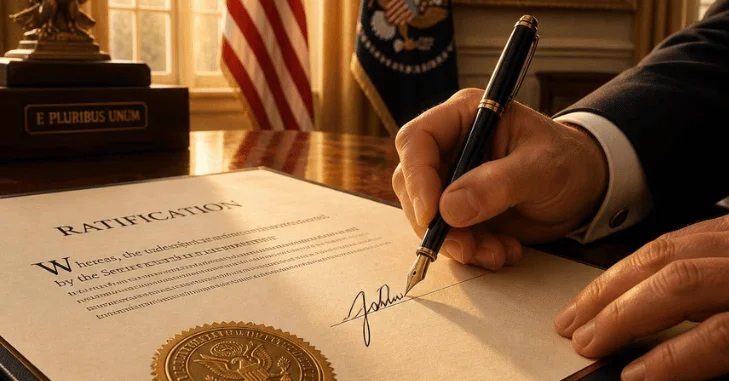
Agency law borrows the same rule for businesses. An employee acts outside their authority, the company learns about it, and the company keeps the benefit. That choice binds the company to a contract nobody at the top ever authorized.
Picture a shift lead who books a staffing agency at premium rates on a Friday night, running up a $1,900 invoice. The owner never approved that spending. If the crew works the shift and the owner keeps the revenue, the invoice is the owner’s problem. Restaurants running into last-minute staffing problems hit this constantly, because the fix happens hours before anyone senior can sign off.
Corporate boards use a more formal version. A director signs a lease beyond their delegated limit, and the board later votes to adopt it. The vote does not just forgive the director. It converts the lease into a properly authorized company obligation, which is why the minutes matter more than the apology.
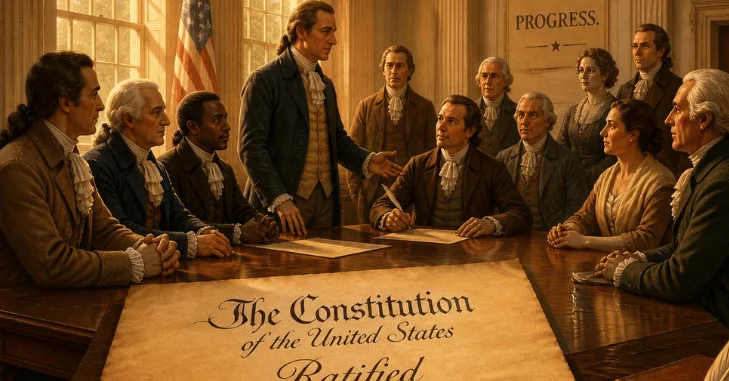
Amending the Constitution: The 38-State Threshold
Two-thirds of both chambers of Congress can propose an amendment, or two-thirds of state legislatures can call a convention. Proposing is the easy half. The states decide. According to the National Archives and Records Administration, an amendment takes effect only once three-fourths of the states, 38 of 50, ratify it. The Office of the Federal Register has administered that count since 1985. The Archivist certifies the paperwork on its face and does not judge whether a state’s vote was politically wise.
Clocks here can run long. Consider the 27th Amendment, on congressional pay, which was proposed in 1789 and certified on May 18, 1992. That is a wait of more than two centuries. Thousands of amendments have been floated since the founding. Twenty-seven made it. Congress sometimes writes a deadline into the proposal itself. When it does, states that approve after the window closes add nothing. That single design choice has decided the fate of more proposals than any argument on the merits.
Treaties: The Senate Does Not Actually Ratify Them
This is the detail almost every explainer gets wrong. News coverage says the Senate ratified a treaty. It did not. The Senate votes on a resolution of advice and consent, and it needs two-thirds of the senators present.
A President then decides whether to complete the act by exchanging or depositing the instrument. A President can win the Senate vote and still choose not to finish. Signing a treaty earlier is a separate step, closer to an intention to proceed than a binding promise.
How It Differs From Approval and Confirmation
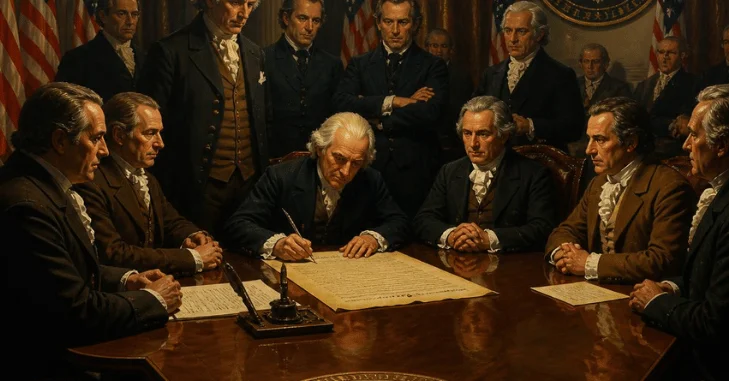
These three words get swapped around loosely, and the distinctions are worth holding.
- Approval is the broad term. It can come before an act or after it.
- Confirmation usually means checking that something already true is true, or installing a person in an office.
- Ratification is narrower than both. It looks backward at an act that was already taken without authority, and it makes that act binding.
Ask one question to tell them apart: Did the act happen first? If yes, and the approval fixes it, you are in the right category.
Conclusion
Ratification can turn an unauthorized or previously incomplete act into a legally binding obligation, but its effect depends on the type of transaction and the applicable law. Whether approval is given through a formal vote, written agreement, or conduct, the key issues are usually authority, legal capacity, knowledge of the material facts, and acceptance of the transaction. Because ratification can limit your ability to later reject an agreement, anyone facing a significant contract, business obligation, treaty-related matter, or other legal decision should review the circumstances carefully and consider professional legal advice before taking action.
What to Do With This
If someone made a commitment in your name and you are not sure you want it, stop accepting the benefit first. Get the full terms in writing, then decide in writing. If you do want the deal, say so clearly and note the date the act took place. When real money or a business obligation rides on the answer, have an attorney read the file before your next payment does the deciding for you.
Apart from that, if you want to know about the article Indited Meaning: A Practical Overview of Definition, Pronunciation, History, Examples, and Indited vs. Indicted, then please visit our Law Category.
Frequently Asked Questions
Sometimes. Silence alone is weak, but silence plus benefit is strong. If you know about the deal, say nothing and keep what was delivered; courts often treat that as acceptance.
Yes. A contract signed as a minor is voidable, and an adult can affirm it expressly or by conduct. Keeping the car and making payments after your birthday is usually enough.
In most cases, yes. This is called relation back, and it means the obligations run from the day the act happened. That can matter for interest, deadlines, and liability.
Thirty-eight of the 50 states, which is three-fourths. Congress can direct whether state legislatures or state conventions do the voting.
No. You take the transaction whole, or you reject it whole. Cherry-picking the good clauses is exactly what the rule exists to prevent.