

Someone trusts you with money, a client list, or a login. You then use it for something the owner never agreed to. That single move is what the law calls misappropriation, and it shows up in four very different fights with four different rulebooks.
Quick answer: The term describes using money, property, secret information, or a person’s identity in a way the owner never authorised, after you already had lawful access to it. It covers misused funds, stolen trade secrets, unauthorised use of a name or face, and trading on confidential news. Each version carries its own law, deadline, and penalty.
Key Takeaways
- Lawful access first, unauthorised use second. That order separates this offence from ordinary theft.
- Four senses of the word exist, and picking the wrong one sends you to the wrong court with the wrong deadline.
- Federal trade secret cases must start within three years of discovery.
- Willful trade secret cases can carry double damages plus attorney fees.
- Documents decide these cases: contracts, access logs, bank records, and offboarding paperwork.
The four senses of the word, side by side
One word, four fights. A church bookkeeper who drains an account and a chemist who emails a formula to a rival wear the same label. Almost nothing else about their cases matches.
| Type | Typical setting | Governing law | Who can act? |
| Funds and property | Employees, treasurers, trustees, public officials | State theft and embezzlement codes | Prosecutor, plus the owner in a civil suit |
| Trade secrets | Departing staff, vendors, competitors | Defend Trade Secrets Act and state UTSA versions | The owner and federal prosecutors |
| Name or likeness | Ads, endorsements, social posts | State right of publicity and privacy law | The person shown, or their estate |
| Inside information | Attorneys, bankers, consultants | Federal securities law | The SEC and the DOJ |
Read the rows before you read anything else about your own situation. Pick the wrong row, and you inherit the wrong filing deadline, plus a defence built for a different statute.
That second row is broader than most people expect. Recipes and source code qualify, and so do pricing models, supplier terms, and plant settings. Plant engineers know how much value hides in details like the sizing and loading rules that stabilise mills and reactor beds, which took years of runs to tune. A rival who obtains those numbers through a former operator has a real exposure problem.
Misappropriation of Funds: Money you Hold for someone Else
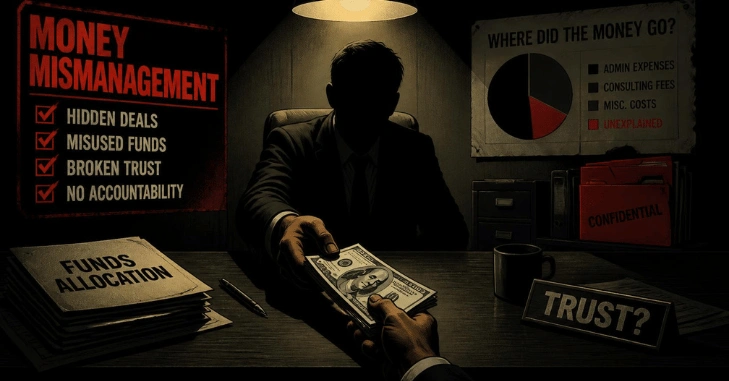
This is the sense most readers arrive with. You had permission to touch the money. You then spent it on something the owner never approved. Misappropriation: The first lawful step is what sets the charge apart from plain theft, where the taking is wrong from the opening second.
Three fact patterns account for most of these charges:
- A treasurer or bookkeeper routes organization money into a personal account.
- Public officials spend agency dollars on a purpose the budget never covered.
- Contractors collect a deposit for one job and pay for a different job with it.
Prosecutors bring most of these under state theft or embezzlement statutes, and the dollar amount usually sets the grade. Thresholds vary a lot by state, so the same $3,000 can be a misdemeanor in one place and a felony across the border. Restitution normally rides along with any sentence.
How it Differs from Embezzlement, Theft, and Conversion
These labels overlap, and courts use them loosely. A short version helps:
- Theft covers taking property you never had a right to hold.
- Embezzlement is the criminal charge aimed at a person in a position of trust.
- Conversion is the civil twin, and it lets the owner sue for the value of what went missing.
Many state codes fold all of them into one consolidated theft chapter, so the charging document may not use the word at all.
Trade secrets: The Federal Test and what Improper Means covers
Congress passed the Defend Trade Secrets Act in 2016 and gave owners a federal civil claim for the first time. The federal definition, published by the Cornell Legal Information Institute at Section 1839(5) of Title 18, covers two separate acts. One is acquiring a trade secret through improper means. The other is disclosing or using a secret you knew came from someone who owed a duty of secrecy.
Improper means gets its own list in that same section. Theft, bribery, misrepresentation, breach of a duty to maintain secrecy, and electronic espionage all count.
It also names what stays lawful, and this is the part that quietly ends disputes. Reverse engineering a product you bought is allowed. So is working the answer out independently. If your team can document its own path to the result, the claim collapses.
Likeness and Inside information: two Narrower claims

Likeness claims are a privacy tort with a commercial edge. A brand runs your photo in an ad, or clones your voice for a promo, and never asked. Most states call this the right of publicity, and damages track what a license would have cost, sometimes with profits on top.
Securities law takes a stranger route. An attorney who learns of a merger from a client and buys shares has not stolen from the company he bought into. He betrayed the source of the tip. The Supreme Court accepted that reasoning in United States v. O’Hagan in 1997, and the SEC and the DOJ still build insider trading cases on it.
Civil suit, criminal charge, or both
Both tracks can run at the same time, and different standards judge them.
| Criminal case | Civil case | |
| Who files | A prosecutor | The owner |
| Burden of proof | Beyond a reasonable doubt | Preponderance of the Evidence |
| Outcome | Fines, probation, prison, restitution | Damages, injunction, sometimes fees |
An employer that finds a hole in the register usually starts on the civil side, because it controls the timing there. A police report hands the schedule to someone else. Restaurants and retailers carry unusual risk here, since cash and inventory move fast and rosters turn over weekly. Owners buried in last-minute staffing problems for restaurants rarely have a spare hour for the controls that catch a pattern early.
What the Evidence Actually Has to Show

Cases turn on paper, not on how badly the conduct stings. Five items do most of the work:
- A signed agreement, policy, or bylaw that defines the duty.
- Proof of access: badge logs, bank signatures, file downloads, email trails.
- Evidence of use: the competing product, the personal purchase, the ad that ran.
- Confirmation that nobody authorised it, usually board minutes or an approval workflow.
- A loss number a judge can check, tied to invoices or account statements.
Weak cases almost always fail on item four. An informal practice of letting a manager buy supplies with the company card becomes consent, and consent ends the claim.
Deadlines and the Money at Stake
Federal trade secret cases run on a firm clock. The deadline published by the Cornell Legal Information Institute at Section 1836(d) of Title 18 gives an owner 3 years from the day the conduct came to light. Reasonable diligence counts too, so a company that should have spotted the problem earlier cannot stall. Better still, a continuing course of conduct counts as one claim, so the clock never restarts with each new use.
Money at stake climbs fast once liability lands. That statute lets a court award actual loss plus unjust enrichment, or a reasonable royalty instead. Where the conduct was willful and malicious, exemplary damages can reach two times the base award, and the winner can ask for attorney fees.
State fund cases run on their own limitation periods, and they vary widely. Some states also pause the clock until a reasonable audit would have surfaced the problem.
How a Business or Nonprofit Can Reduce the Risk
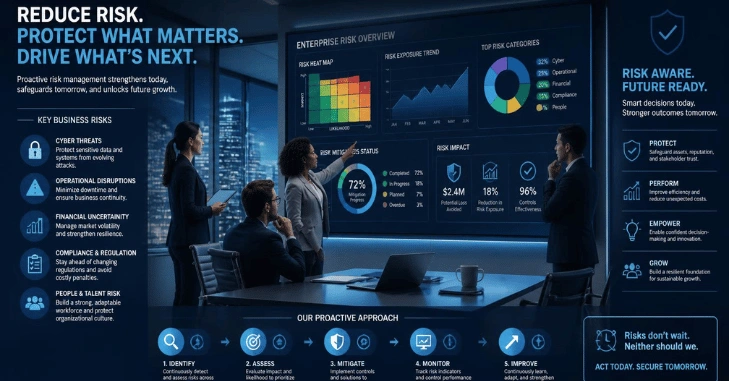
Prevention here is boring and cheap, which is why it gets skipped. Run this checklist if you own a small business or sit on a nonprofit board. Five habits close most of the gaps:
- Write ownership clauses in before work starts. Every vendor, freelancer, and agency contract should say who owns the deliverables, the data, and the logins. That applies to a design retainer and equally to an on-page SEO service that touches your analytics, your keyword research, and your admin access.
- Require dual approval for any payment over a set amount, and never let one person both approve and reconcile it.
- Reconcile monthly and hand the job to someone who does not write the checks.
- Close accounts on the last day of employment, not the following week. Old credentials feed most of these cases.
- Mark confidential files confidential. Courts ask what steps you took to keep a secret secret, and unlabeled files answer badly.
Your Next Step
If you think money or information walked out the door, protect the record before you confront anyone. Preserve the logs, freeze the accounts, and pull the signed agreements into one folder. Misappropriation: Then bring that folder to an attorney licensed in your state, because the deadline in your row of the table has already started running. Treat this article as general information, not as legal advice for your case.
Frequently Asked Questions
It depends on the amount and the state. Small dollar figures usually land as misdemeanors. Larger sums, public money, and vulnerable victims push a case into felony territory, and federal trade secret charges are felonies from the start.
Intent matters. A prosecutor has to show you knew the use was not authorized. Sloppy bookkeeping and a repaid personal charge usually end as an HR matter, though repeated patterns look very different to a jury.
It helps a lot. An NDA proves the duty and the secrecy effort in one document, which removes the two arguments defendants raise first. It does not replace the statute, and you can still sue without one.
Independent development is a full defence under federal law, and so is reverse engineering a product you bought. Keep your notebooks, commits, and test logs. That record is the defence.
Civil trade secret suits often run one to three years, and many settle after the injunction fight. Criminal fraud cases can move faster, especially when restitution is on the table.