
You are sore, the bike is wrecked, and an adjuster has already called with a friendly voice and a small number. That phone call is usually the moment a rider decides whether to get help. This guide covers what representation costs, when it earns its keep, and how to check that the person you hire is any good.
Short answer: a motorcycle accident lawyer works on contingency, usually about 33% of the settlement before a lawsuit and closer to 40% after one is filed. Case costs come out separately. Hiring one pays off when your injuries need more than an urgent care visit, when fault is disputed, or when the insurer’s first offer lands within days.
TL;DR: what riders need to know
- You pay nothing up front. The fee comes out of the recovery, and it is negotiable.
- Ask whether the percentage is taken before or after case costs. On a $60,000 settlement, that wording is worth thousands.
- Most states give you two or three years to file suit. Claims against a city or state agency can expire in six months.
- Riders face a built-in credibility problem with adjusters and juries. Good counsel plans around it from day one.
- Small property-damage-only claims rarely need an attorney. Anything with surgery, lost work, or shared blame usually does.
Motorcycle injury claim at a glance
| Item | What to expect | Why it matters |
|---|---|---|
| Contingency fee, pre-suit | Roughly 33% of the gross settlement | Standard across most states |
| Contingency fee, after filing | Roughly 40% | Litigation costs far more staff time |
| Case costs | $500 to $25,000+ | Records, experts, filing fees, depositions |
| Initial consultation | Free at nearly every firm | Use it to interview two or three offices |
| Filing deadline | Commonly 2 to 3 years | Miss it and the claim dies, whatever the merits |
| Typical timeline | 4 to 18 months | Longer if surgery or trial is involved |
What a motorcycle accident lawyer actually does
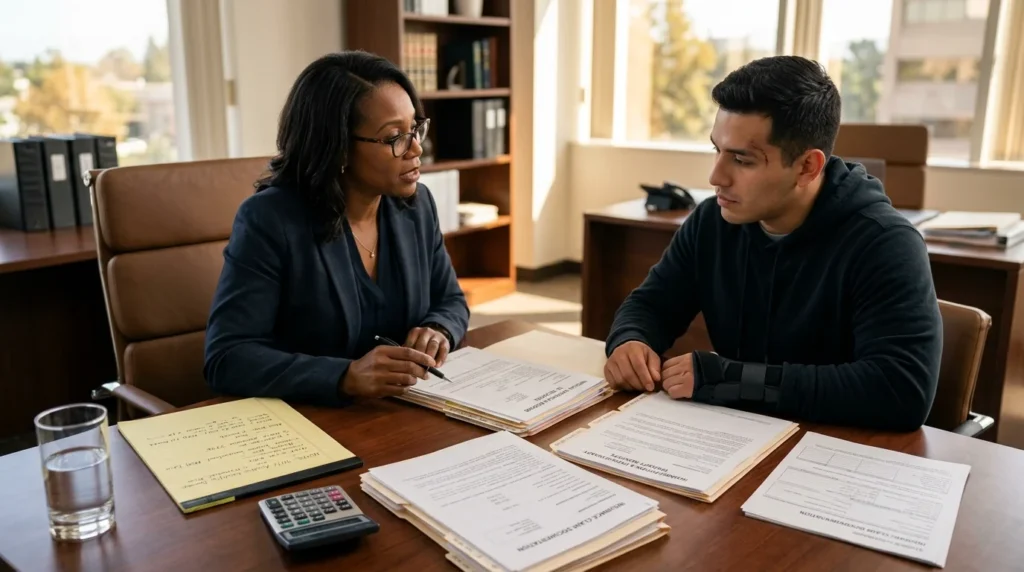
Courtroom drama is a small part of it. Roughly nine out of ten claims settle without a trial, so the real work is building leverage.
That means pulling the crash report and correcting it if the officer got the sequence wrong. It means collecting scene photos, helmet camera video, and any nearby doorbell or business footage before it overwrites itself. Your attorney orders medical records, tracks lost wages, and handles every call from the other carrier so you stop repeating your story to people paid to poke holes in it.
Half the job is math. Someone has to price future treatment, reduced earning capacity, and the hospital or health plan liens that quietly eat a settlement. Riders who negotiate alone often forget the lien step entirely, then watch a good number shrink after the check clears.
Why these claims get fought harder than car claims
Two things make a motorcycle case different. The first is injury severity. There is no crumple zone, so a crash at 35 mph that would bruise a driver can break a rider’s leg in three places.
Bias is the second. Adjusters open a rider’s file expecting speed, lane splitting, or a modified exhaust, and some jurors arrive with the same assumption. Federal data backs the danger without supporting the blame. NHTSA’s Traffic Safety Facts report on 2023 crash data reported 6,335 motorcyclists killed that year. Per 100 million vehicle miles travelled, NHTSA put the rider fatality rate at almost 28 times the passenger car occupant rate.
Bigger injuries plus a skeptical audience equals a carrier that digs in. That is exactly why documentation and early medical care carry more weight here than in a fender bender.
What it really costs, with the math shown

Nobody bills you by the hour. You sign a contingency agreement, and the fee is a slice of whatever comes in. The slice is the easy part to understand. The base it is taken from is where riders get surprised.
| $60,000 settlement | Fee on gross | Fee after costs |
|---|---|---|
| Case costs | $6,000 | $6,000 |
| Attorney fee at 33% | $19,800 | $17,820 |
| Your net | $34,200 | $36,180 |
Same firm, same percentage, roughly $2,000 apart. Ask which method the agreement uses and get the answer in writing. Ask too whether the percentage climbs if a lawsuit is filed, and at what trigger point, because “upon filing” and “upon deposition” are different deals.
One more question saves arguments later: who eats the costs if the case loses? Many firms absorb them. Some do not, and a rider who signed without reading can end up owing money after a defence verdict. Reading the fee agreement closely is the same instinct as understanding your rights inside any vehicle finance claim, where the paperwork, not the pitch, decides what you keep.
Lawyer, do it yourself, or settle fast
| Route | Works when | Downside |
|---|---|---|
| Handle it yourself | Property damage only, no injury, clear fault | You negotiate against a professional daily |
| Accept the early offer | You need cash now and injuries are minor | Signs away future treatment costs forever |
| Hire counsel | Any real injury, disputed fault, or a commercial truck involved | A third of the recovery goes to the fee |
The verdict: if your treatment stopped at one clinic visit and the other driver’s insurer already admits fault, negotiate it yourself and keep the whole check. Everything past that leans toward representation. Surgery, a fracture, missed paychecks, a hit-and-run, or any hint that the adjuster blames you for the crash all point in the same direction.
How long you have to file
Every state sets its own deadline, and it is unforgiving. Two years is the most common window, though several states allow three and a few stretch to four. Louisiana historically ran one of the shortest clocks in the country before extending it.
Watch three traps. Claims against a government body, say a pothole case or a crash with a city truck, often require formal notice within 60 to 180 days. Wrongful death deadlines run from the date of death, not the crash. And the clock does not pause because you are still treating.
Vetting an attorney in one afternoon
- Check the license. Search the attorney’s name on your state bar’s website. It is free, takes a minute, and shows any public discipline.
- Ask how many motorcycle cases they closed last year. Personal injury is broad. You want someone who has argued lane position to a jury.
- Ask who handles your file day-to-day. The name on the billboard is rarely the person returning your calls.
- Ask for their last three trial results. Firms that never try cases get lower offers, because carriers track that.
- Read the fee agreement before signing. Every term above should appear in it.
Two consultations are a reasonable minimum. They cost nothing but an hour, and the difference between offices becomes obvious fast when you ask the same five questions twice.
Helmets, shared fault, and the blame game.

Riders ask one question more than any other here: does not wearing a helmet, or being partly at fault, ruin your claim? Almost never. Riding without a helmet does not end a claim, even in states that require one. It can reduce a head injury award, and in several states it has no effect on other damages at all.
Shared fault works similarly. Most states use comparative negligence, so a rider found 20% responsible collects 80% of the damages. A few states are far harsher and bar recovery past a threshold. This is the single biggest reason to get an honest read on your case early rather than guessing.
Your first week after the crash
Get examined even if you feel fine. Adrenaline hides fractures, and a gap between the crash date and the first appointment is the first thing an adjuster circles. Imaging matters here, and choosing a trusted clinic for your ultrasound or other scans produces records that hold up when the carrier’s reviewer goes looking for weaknesses.
Photograph everything while it is fresh: the bike from every angle, your gear, road debris, skid marks, and the intersection itself. Guidance on the number of photos to include to sell a car online applies just as well to evidence. More angles, better light, nothing cropped out.
Then go quiet. Give the other insurer no recorded statement, post nothing about the crash, and keep a short daily note about pain and missed work. Those notes turn vague suffering into a documented number months later.
Next step
Pull your insurance declarations page and your crash report, list your treatment so far, then book two free consultations this week. Bring the five questions above and hire whoever answers them plainly. The deadline is running whether or not you have made a decision.
Frequently asked questions
Usually no. If nobody was hurt and the insurer accepts fault, handle the property damage yourself and keep the money.
Anyone who answers that in a first phone call is guessing. Value tracks medical bills, lost income, permanent limitations, and available policy limits.
Yes. The first firm may claim a share of the eventual fee for work already done, but you are not locked in.
Your own uninsured motorist coverage steps in if you carry it. Check your declarations page today, not after a crash.
Simple claims resolve in four to eight months. Cases involving surgery or litigation commonly run a year or longer.