
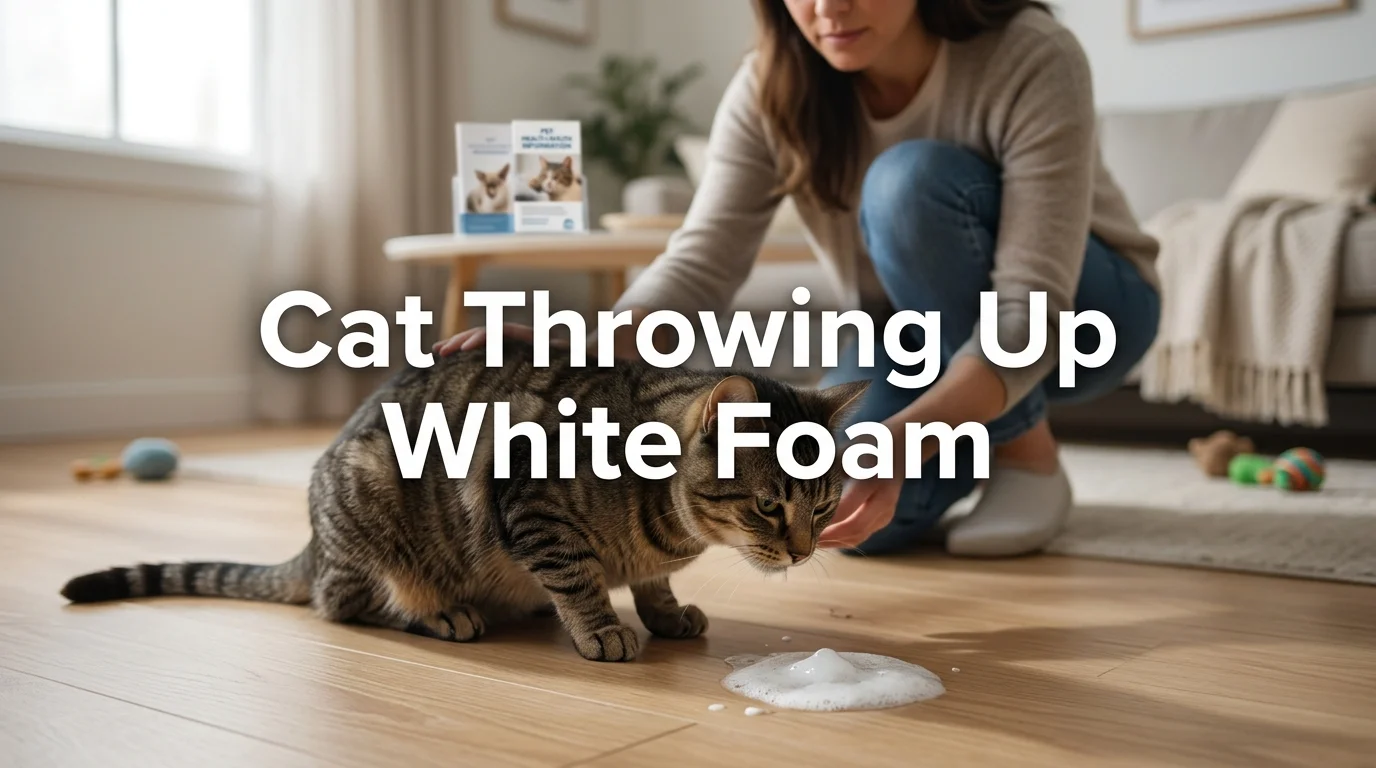
Seeing white foam on the floor can be alarming, especially when your pet seemed normal minutes earlier. A cat throwing up white foam may have an empty or irritated stomach, but repeated vomiting can signal illness. The pattern, appetite, behavior, and other symptoms matter more than the foam’s color alone. You might also like In Transit In Package Tracking.
| Quick fact | What it means |
|---|---|
| White foam | Often fluid, mucus, and froth from an empty or irritated stomach |
| One isolated episode | May be monitored if your pet otherwise acts normal |
| Repeated vomiting | Needs veterinary attention, especially with other symptoms |
| Blood, severe weakness, or suspected toxin | Seek urgent veterinary care |
| Not eating or drinking normally | Contact a veterinarian promptly |
| Useful evidence | Note timing, food, stool, behavior, and take a short video if possible |
White foamy vomit often appears when the stomach contains little food. One episode may not be an emergency in an otherwise normal pet. Repeated vomiting, loss of appetite, lethargy, pain, blood, or possible toxin exposure should prompt veterinary care.
Key takeaways
- White foam describes what came up, not the underlying diagnosis.
- Empty stomachs, hairballs, dietary upset, parasites, and inflammation can cause vomiting.
- Foreign objects, toxins, pancreatitis, kidney disease, and other disorders can also cause it.
- Repeated episodes or other signs of illness warrant veterinary assessment.
- Suspected poisoning needs immediate professional guidance.
- A video can help a veterinarian distinguish vomiting from coughing or regurgitation.
Why white foam can appear
Vomiting is an active process that usually includes retching and abdominal contractions. When little food is present, the material may look white, clear, or frothy. That appearance can happen with minor stomach irritation or more serious disease.
The foam itself cannot identify the cause. Veterinarians consider frequency, appetite, stool changes, pain, weight loss, age, and possible exposures. A single event and a recurring pattern therefore need different responses.
Common reasons cats vomit white foam
The causes below range from a simple empty stomach to a swallowed object that needs urgent treatment. Newslibe’s Pets section carries more everyday animal-care reading alongside this guide.
An empty or irritated stomach
An empty stomach is a common setting for foamy vomit. Digestive fluid and mucus can be expelled when nausea triggers vomiting between meals. The episode may occur early in the morning or after an unusually long feeding gap.
This does not prove that hunger caused the problem. Recurrent morning vomiting still deserves discussion with your veterinarian. A clinician can decide whether feeding changes or medical evaluation make sense.
Hairballs and swallowed fur
Swallowed hair can irritate the stomach before a hairball appears. Some pets produce foam before or after bringing up a clump of fur. Frequent hairball episodes should not automatically be dismissed as normal.
Regular grooming may reduce the loose fur they swallow. Persistent retching without producing a hairball needs veterinary attention. A blockage or another problem can sometimes look similar.
Dietary upset, food changes, or eating something unusual
A sudden food change, table scraps, spoiled food, or plant material can upset the digestive tract. Mild irritation may cause vomiting when the stomach is partly empty. The same symptom can also follow food intolerance or infection.
Think about any new treats, foods, medications, plants, or household items. Share that history with the veterinary team if vomiting continues. Do not assume a new food is the cause without considering other signs.
Parasites or gastrointestinal inflammation
Intestinal parasites can cause vomiting, especially in kittens or pets with outdoor exposure. Stomach or intestinal inflammation can also produce repeated nausea and vomiting. Diarrhea, poor appetite, or weight loss may appear at the same time.
A veterinarian may recommend stool testing or other diagnostics. Treatment depends on the cause, not the vomit’s appearance. Avoid using leftover dewormers or medications without professional guidance.
Foreign objects or toxins
String, thread, small toys, and other swallowed objects can obstruct the digestive tract. Toxins and irritating household substances can also cause vomiting. These situations can become urgent even if the first vomit looks like harmless foam.
Do not pull visible string from the mouth or rectum. Do not induce vomiting unless a veterinary professional specifically instructs you. Cornell University’s Feline Health Center reports that the ASPCA’s Animal Poison Control Center handles well over 100,000 calls a year about substances that may poison household pets. Sudden bouts of vomiting are among the signs of feline poisoning it lists. Call a veterinarian or poison service immediately when exposure is possible.
Pancreatitis or other medical conditions
Vomiting can occur with pancreatitis, kidney disease, liver disease, thyroid disease, urinary obstruction, and other conditions. These problems often cause additional changes in appetite, energy, thirst, urination, or weight. Older pets and those with chronic illness deserve a lower threshold for veterinary assessment.
No home description can reliably separate these causes. A physical examination and testing may be needed. Earlier evaluation is especially useful when vomiting keeps returning.
Cat throwing up white foam: when should you call a vet?
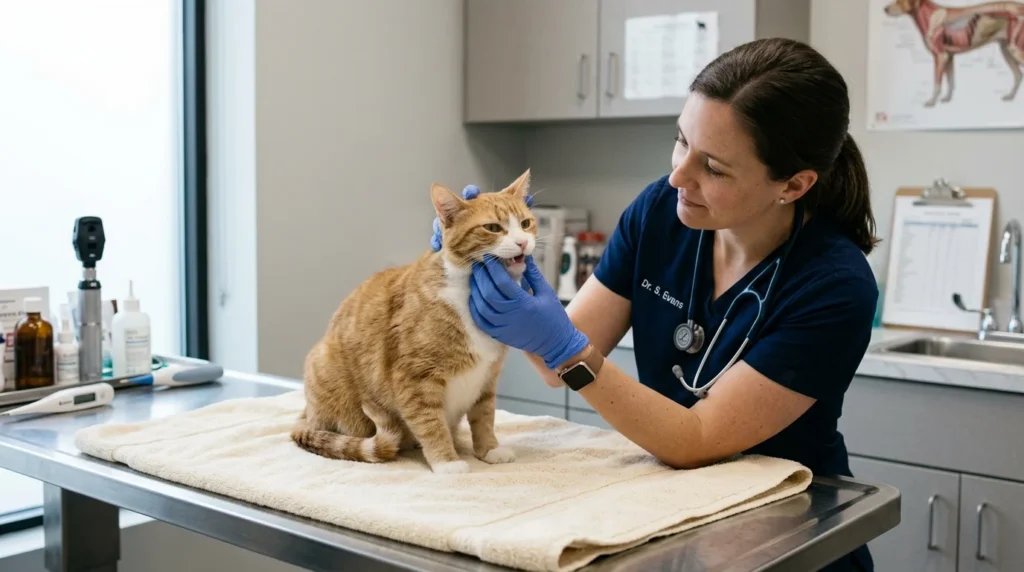
Call your veterinarian promptly when vomiting repeats or your pet is not acting normally. The same applies when appetite falls, diarrhea develops, or the abdomen seems painful. Ongoing vomiting can lead to dehydration and may reflect an underlying disease.
Emergency warning signs
- Blood in the vomit or material that resembles coffee grounds.
- Repeated vomiting over a short period.
- Severe lethargy, collapse, or trouble standing.
- A swollen or painful abdomen.
- Suspected string, foreign-object, medication, chemical, or toxic plant exposure.
- Inability to keep water down.
- Trouble urinating, especially in a male pet.
- Breathing difficulty or repeated coughing with foam.
In the United States, suspected poisoning deserves immediate professional advice. The ASPCA Poison Control Center is available around the clock at 888-426-4435, and a consultation fee may apply. You can also contact your regular veterinarian or the nearest emergency clinic.
What to do after one isolated episode
If your pet vomits once but remains bright, comfortable, and interested in normal activities, close observation may be reasonable. Keep fresh water available unless your veterinarian gives different instructions. Watch closely for another episode or any change in appetite, energy, stool, or urination.
What to record
- Record the time and what the vomit looked like.
- Note when your pet last ate and drank.
- Check for access to plants, string, trash, medications, or chemicals.
- Watch the litter box for normal urine and stool.
- Take a short video if the episode happens again.
- Call your veterinarian if vomiting repeats or new symptoms appear.
Do not give human nausea medicines, antacids, or pain relievers without veterinary direction. Do not impose a prolonged fast unless a veterinarian recommends it. If home care is appropriate, your veterinarian may suggest small portions of an easily digested diet.
Vomiting, regurgitation, or coughing?
Vomiting usually involves nausea, retching, and visible abdominal effort. Regurgitation is more passive and often happens soon after eating or drinking. Coughing can also produce froth, so a short video can be valuable.
| Sign | Vomiting | Regurgitation | Coughing |
|---|---|---|---|
| Abdominal effort | Usually present | Usually absent | May look like repeated chest or throat effort |
| Timing | Variable | Often soon after eating | Variable |
| Material | Food, fluid, foam, or bile | Often undigested food or fluid | May produce froth or mucus |
| Helpful next step | Note frequency and other symptoms | Note meal timing | Film the episode for your veterinarian |
Confusing these events can change the diagnostic approach. A veterinarian can often learn a great deal from a clear phone video. Record the event only when doing so does not delay urgent care.
What a veterinarian may check
The veterinary team will usually start with the history and physical examination. They may ask about diet changes, toxin access, medications, bowel movements, urination, and episode frequency. Your answers can help narrow a long list of possible causes.
Testing can include blood work, urine testing, stool testing, X-rays, or ultrasound. The exact plan depends on age, examination findings, and symptom severity. A suspected obstruction or systemic disease may require faster or more extensive testing.
Treatment also varies with the cause. Some patients need anti-nausea medication, fluids, or a prescribed diet. Others need specific treatment for an obstruction, toxin, parasite, or underlying disease.
Reduce future risk and make monitoring easier
Keep strings, dental floss, medications, toxic plants, and small swallowable objects out of reach. Maintain a consistent feeding routine and make food changes gradually when possible. Regular grooming can reduce loose fur, especially in long-haired pets.
Households with dogs can also review Newslibe’s guide to choosing a dog and trainer. The Health section offers broader wellness reading, though pet symptoms still require veterinary sources.
Keep a simple note when vomiting occurs. Record the date, meal timing, appearance, stool, appetite, and behavior. Patterns are easier to recognize when you have several observations written down.
Frequently asked questions
Is a cat throwing up white foam always an emergency?
No, one isolated episode may not be an emergency when your pet otherwise acts normal. Repeated vomiting or added symptoms change the situation. Call a veterinarian promptly when appetite, energy, comfort, or hydration seems abnormal.
What if my pet is vomiting foam and not eating?
Loss of appetite alongside vomiting deserves veterinary attention. Cats can become dehydrated, and reduced food intake may signal a significant illness. Contact your veterinarian rather than waiting through repeated episodes.
Why does it happen first thing in the morning?
The stomach may contain little food after an overnight gap. That can make vomited fluid look clear or foamy. Repeated morning episodes still need veterinary discussion because several conditions can cause nausea.
Can a hairball cause white foam?
Yes, swallowed fur can irritate the stomach before or after a hairball appears. Discuss frequent retching or repeated hairballs with a veterinarian. Ongoing symptoms can point to another digestive problem.
Should I change food immediately?
Avoid making several diet changes while you are still trying to identify the cause. Sudden changes can create more digestive upset. Ask your veterinarian about diet adjustments if vomiting recurs.
Your next step
Watch the whole pet, not only the color of the vomit. A single mild episode may pass, while repeated vomiting or other symptoms warrant professional care. If you suspect a toxin or obstruction, seek veterinary help immediately.