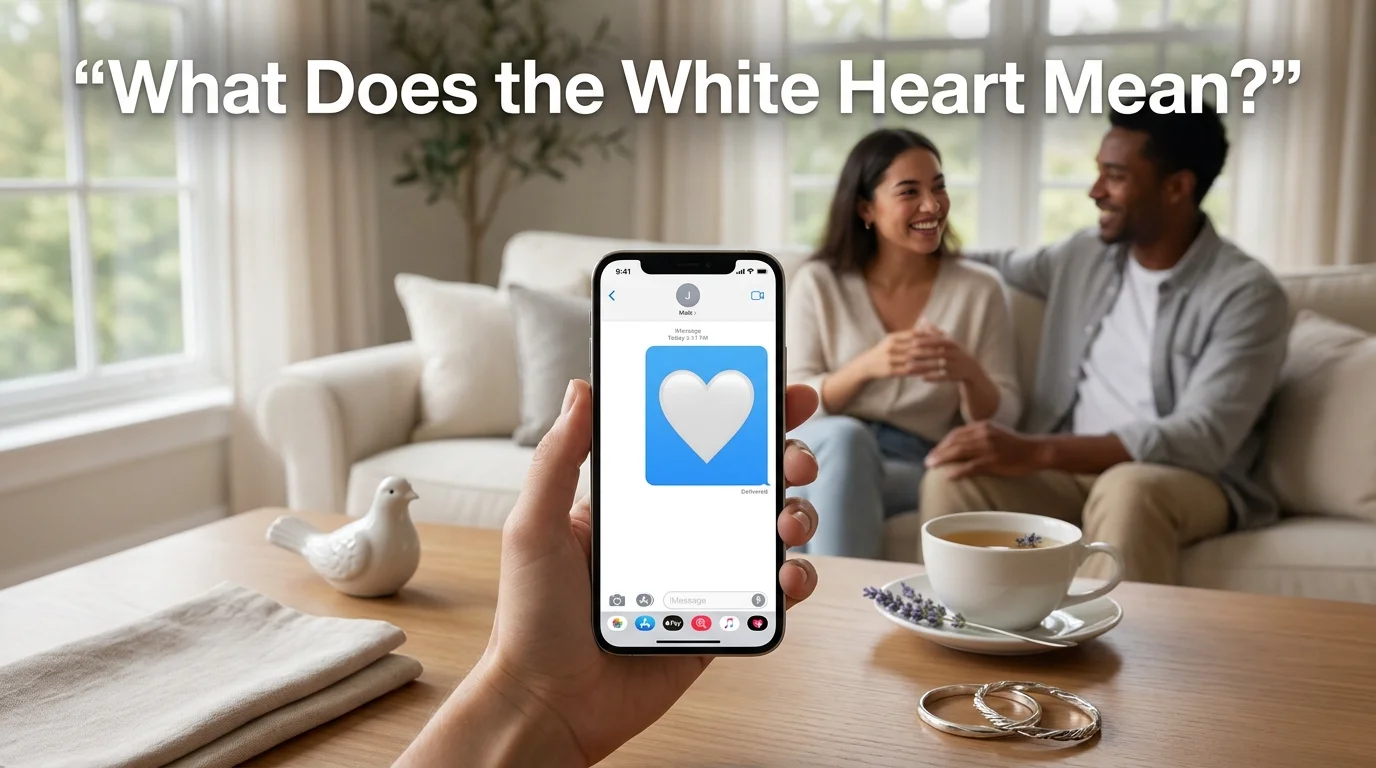
You open a text, see a white heart at the end, and suddenly the shortest part of the message becomes the hardest part to interpret. What Does the White Heart Mean When Someone Sends 🤍? Does it mean the person likes you, sees you as a friend, wants to comfort you, or simply prefers the way the white heart looks? The answer depends less on a secret emoji code and more on the relationship, the message, and the situation.
The white heart emoji (🤍) usually expresses gentle affection, sincere care, support, peace, or sympathy. It can be romantic, but it is not automatically a love confession. In memorial posts it may signal remembrance, while on Instagram or TikTok it can simply match a clean, soft, or neutral aesthetic.
What Does the White Heart Mean?
The simplest white heart meaning is love or affection expressed in a gentle, understated way. People also use 🤍 for friendship, emotional support, sympathy, remembrance, peace, weddings, and things associated with the color white. Unlike a red heart, it often feels softer and less intense, although that does not make it automatically platonic.
Unicode identifies the symbol as the White Heart, code point U+1F90D, and the emoji appeared in Unicode’s Emoji 12.0 set. Emojipedia describes it as an emoji used for love and affection and notes its common use around someone’s passing as well as heavenly or angelic themes. Those references establish the emoji and its broad usage, but they do not create a rule saying that every white heart has one fixed emotional meaning.
Here are some of the most common interpretations you may encounter:
| Context | What 🤍 commonly suggests |
|---|---|
| Romantic relationship | Gentle, sincere, or peaceful love |
| Friendship | Appreciation, loyalty, or platonic affection |
| Family | Warmth, support, and caring |
| Difficult moment | Comfort and emotional support |
| Death or memorial post | Sympathy, grief, or remembrance |
| Wedding content | Love, purity, celebration, or bridal imagery |
| Instagram/TikTok aesthetic | Clean, neutral, minimalist, or soft styling |
| General message | Kindness, gratitude, or affection |
The table is a starting point rather than a decoding chart. The same emoji can mean something noticeably different when sent by your partner, your sibling, your closest friend, or someone you barely know. Reading the words around the emoji will usually tell you more than its color alone.
Does a White Heart Mean Love?
Yes, a white heart can mean love, and that love can be romantic. A partner might send “I miss you 🤍” or “Love you always 🤍” because the white heart fits a softer, calmer style than ❤️. In that situation, there is little reason to assume the sender is downgrading the relationship simply because the heart is white.
At the same time, 🤍 is widely used for affection that has nothing to do with romance. A friend can send it after saying “I’m proud of you,” while a family member might add it to a birthday or good-luck message. The surrounding conversation and your existing relationship are therefore stronger clues than the emoji alone.
That distinction is especially important if you are trying to determine whether someone has a crush on you. One white heart is weak evidence of romantic interest because many people use heart emojis casually with friends and family. Look for a broader pattern such as flirting, personal compliments, invitations to spend time together, or clearly affectionate wording before treating 🤍 as a romantic signal.
What Does a White Heart Mean From a Girl?
A white heart from a girl can indicate affection, friendship, gratitude, support, flirting, or simply a preferred texting style. Her gender does not assign the emoji a special definition, so “she sent 🤍” does not automatically translate to “she likes me romantically.” The conversation before the emoji matters far more.
Suppose she replies, “Thank you for always being there 🤍.” That most naturally communicates warmth and appreciation, although the relationship could still be romantic if the two of you are dating. If the message includes obvious flirting or follows an intimate conversation, the same white heart may carry stronger romantic weight.
It is also worth noticing whether she sends white hearts to everyone. Some people consistently use one heart color because it suits their personality, phone theme, social-media aesthetic, or favorite color combination. An emoji that appears in nearly every message is less revealing than one used selectively during emotionally significant conversations.
What Does a White Heart Mean From a Guy?
A white heart from a guy follows the same basic rule: read the context, not the gender. He may be expressing sincere affection, support, appreciation, friendship, or romantic feelings, depending on your relationship and the rest of the message. There is no universal male-specific meaning attached to 🤍.
For example, “You did amazing today 🤍” can simply be encouragement from a close friend. “I can’t stop thinking about you 🤍” carries a much more romantic tone because the words themselves provide the important clue. The heart strengthens the emotional tone, but it does not create that meaning on its own.
If you are uncertain, consider how he normally communicates with you. More frequent personal messages, flirting, affectionate nicknames, plans to meet one-on-one, and direct expressions of interest provide better evidence than choosing a white heart instead of a red one. Avoid building an entire relationship theory around a single emoji.
What Does the White Heart Mean in Texting?

In everyday texting, 🤍 often makes a message feel warmer without making it feel too intense. It works naturally after encouragement, thanks, apologies, congratulations, affectionate statements, and check-ins during difficult moments. Many people choose it when they want to show genuine care but feel that ❤️ would look too romantic or dramatic.
Imagine receiving “Drive safe and text me when you get home 🤍.” The heart adds concern and tenderness, but the sentence can come from a partner, close friend, sibling, or parent. In other words, the emotional warmth is clear even when the exact type of relationship is not.
This flexibility is part of what makes internet language difficult to interpret literally. The same problem occurs with abbreviations and expressions that change meaning according to context, which is why Newslibe’s guide explaining what FAFO means also emphasizes how online communication depends on audience and situation. Emojis work in much the same way: context completes the message.
What Does 🤍 Mean in Friendship?
Among friends, the white heart often expresses platonic affection, loyalty, appreciation, or emotional closeness. A friend might use it when congratulating you, thanking you for helping, checking that you are okay, or reminding you that they care. None of those messages requires romantic attraction.
Messages such as “So proud of you 🤍,” “You know I’ve always got you 🤍,” and “Best weekend ever 🤍” fit comfortably within friendship. Close friendships often include language that sounds affectionate because affection itself is not exclusively romantic. The white heart’s understated appearance makes it particularly useful when someone wants warmth without turning the message into a dramatic declaration.
Still, friendships can change into romantic relationships, and no emoji can tell you exactly where another person stands. If the sender’s behavior has recently become more flirtatious or intimate, 🤍 may be one small part of that shift. The best interpretation comes from combining the emoji with the person’s words and actions rather than assigning the heart a secret code.
What Does the White Heart Mean in Grief or Sympathy?
The white heart has a particularly recognizable role in messages about grief, sympathy, remembrance, and loss. Emojipedia specifically notes its use in conversations about someone passing away or in references to heavenly and angelic themes. That makes 🤍 a common choice beneath memorial photographs, condolence messages, and tribute posts.
Someone might write “Forever missed 🤍,” “Thinking of your family today 🤍,” or “Rest peacefully 🤍.” In these situations, the white heart generally communicates tenderness and remembrance rather than romance. Its subdued appearance can feel more appropriate for solemn messages than some brighter heart colors.
When offering condolences directly, however, an emoji works best alongside actual words. A short message such as “I’m so sorry for your loss. Thinking of you and your family 🤍” gives the recipient something clear and compassionate to read. Sending only an emoji can feel ambiguous when the situation is serious.
What Does the White Heart Mean on Instagram and TikTok?
On Instagram and TikTok, the white heart may communicate emotion, but it can also function as a visual design choice. Users frequently match emojis to clothing, backgrounds, wedding photos, winter scenes, neutral interiors, beauty content, or minimalist feeds. In those cases, 🤍 may contribute more to the appearance and mood of the post than to a hidden personal message.
A caption such as “Sunday reset ☁️🤍” might simply communicate a peaceful aesthetic. A comment saying “You look beautiful 🤍” is more clearly affectionate or complimentary because the words provide context. A white heart beneath a memorial post, meanwhile, would naturally take on the sympathy and remembrance meaning discussed earlier.
This is why attempting to assign different fixed meanings to the emoji on every platform can be misleading. Instagram, TikTok, Snapchat, iMessage, and WhatsApp may display the design somewhat differently, but a platform does not automatically transform the white heart into a different relationship code. The user, conversation, and surrounding content determine how it should be read.
Is the White Heart Romantic or Platonic?
It can be either romantic or platonic. Compared with the traditional red heart, 🤍 often feels quieter, gentler, or less overtly passionate, which makes it comfortable for friendships as well as relationships. However, couples also use it regularly to express sincere or lasting affection.
A useful approach is to read the sentence without the emoji first. If the words are romantic, the heart probably reinforces romance; if the words are friendly, it probably reinforces friendship. If the words are neutral, your relationship with the sender becomes the next important clue.
Do not assume that a white heart means “friend zone,” either. Someone who prefers a clean or minimalist aesthetic may use 🤍 even with a person they are deeply in love with. Heart colors are communication choices, not official relationship-status labels.
White Heart vs. Red Heart: What’s the Difference?
The red heart ❤️ is traditionally associated with strong love and romance, while the white heart 🤍 tends to feel more understated. That difference can influence how a message is perceived, especially when a sender deliberately changes from one color to another. It still does not establish a universal rule about what the sender intends.
| Emoji | Common tone |
|---|---|
| ❤️ Red heart | Strong love, romance, passion |
| 🩷 Pink heart | Sweet affection, tenderness, flirting |
| 🤍 White heart | Gentle affection, support, peace, sympathy |
| 💛 Yellow heart | Friendship, happiness, warmth |
| 💙 Blue heart | Trust, support, loyalty |
| 💜 Purple heart | Affection, admiration, personal or fandom associations |
| 🖤 Black heart | Dark humor, grief, alternative aesthetic, affection |
Emoji combinations add another layer of context. A white heart beside a dove may reinforce peace or remembrance, while 🤍 beside a ring, bouquet, or bride emoji can naturally fit wedding content. Emojipedia similarly notes both mourning-related use and associations with white-colored subjects such as wedding dresses.
How Should You Reply to a White Heart?
Your reply should match the message and relationship, not just copy the emoji automatically. If a friend sends encouragement, a simple “Thank you 🤍” or another friendly heart may be perfectly natural. If a romantic partner sends an affectionate message, replying with 🤍, ❤️, 🩷, or clear words of affection can all work.
If you like someone but are unsure what their white heart means, you do not need to interrogate the emoji. Continue the conversation naturally and watch whether their words and behavior become more clearly romantic. Direct communication is more reliable than trying to decode every change in emoji color.
For casual conversations, mirroring the sender’s emoji is usually a safe option. For grief or serious emotional support, respond with words first and use the heart only as an addition. That approach reduces ambiguity and makes your actual intention clear.
Why Is the White Heart So Easy to Misread?
Digital communication removes many clues that people normally use when interpreting emotion, including voice, facial expression, and body language. Emojis help replace some of those cues, but they are flexible symbols rather than complete sentences. Two people can therefore use exactly the same heart while intending slightly different things.
Online slang creates the same challenge because meaning develops through communities and repeated usage. Newslibe’s explanation of the phrase “oi oi oi baka” and its cultural context shows how tone, community, and context can change the way a short expression is understood. A white heart is simpler linguistically, but interpreting it still requires the same attention to context.
This is also why you should treat viral charts claiming that every heart color has one precise relationship meaning with caution. They can describe common associations, but they cannot tell you what one specific person intended. The sender’s message and established communication habits remain the strongest evidence.
Frequently Asked Questions
Does 🤍 mean “I love you”?
It can, especially when it comes from a partner or appears beside clearly romantic words. It can also mean friendship, care, gratitude, support, or sympathy. The emoji alone is not enough to conclude that someone is declaring romantic love.
Does a white heart mean someone has a crush on you?
Possibly, but a white heart by itself is not a reliable sign of a crush. Friends and family members also use 🤍 frequently to express affection and support. Look for flirting, repeated personal attention, direct compliments, and other behavior before assuming romantic interest.
Is a white heart less romantic than a red heart?
The white heart often feels less overtly romantic or passionate than ❤️ in casual texting. That makes it useful for platonic affection, quiet support, and understated romantic messages alike. A person can still use 🤍 to express deep love, particularly if it is their preferred heart emoji.
What does 🤍 mean after someone dies?
In a memorial or condolence context, 🤍 usually communicates sympathy, remembrance, peace, or loving respect for the person who died. Its use around death and heavenly or angelic themes is also documented by Emojipedia. The meaning in this context is therefore generally supportive rather than romantic.
Does the white heart mean something different on Snapchat?
There is no universal rule that makes a white heart sent in a Snapchat message mean one specific thing. It can express the same affection, friendship, support, sympathy, or aesthetic preference seen in other messaging environments. Read the snap, caption, conversation, and your relationship with the sender together.
Can I send a white heart to a friend?
Yes, 🤍 works naturally between friends. It can communicate appreciation, encouragement, loyalty, or simple affection without implying romance. If your friend already uses heart emojis casually, it is especially unlikely to seem unusual.
The Bottom Line
So, what does the white heart mean? In most conversations, 🤍 communicates gentle affection, sincere care, friendship, support, peace, sympathy, remembrance, or a soft aesthetic. It can absolutely be romantic, but one white heart is not enough to determine whether someone is in love with you.
The easiest way to interpret it is to read the words first, consider your relationship second, and treat the heart as an emotional clue rather than a secret code. A partner’s “I love you 🤍,” a friend’s “Proud of you 🤍,” and a memorial caption ending in 🤍 use the same symbol while clearly communicating different feelings. Once you focus on context instead of color alone, the white heart becomes much easier to understand.